Webasto versus Cheap Chinese Diesel Heaters
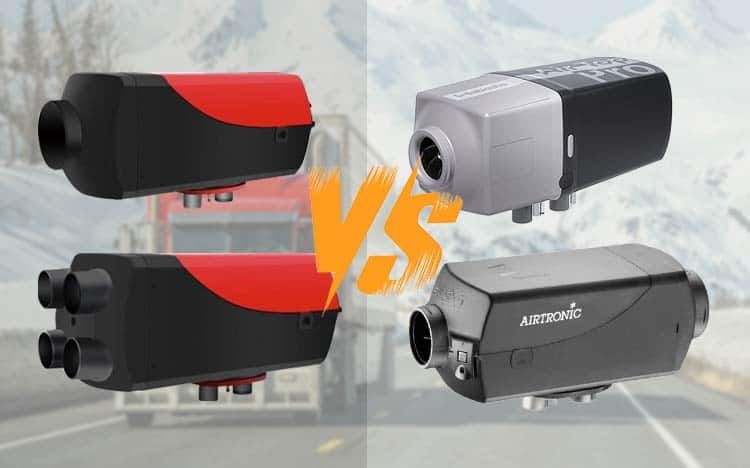
A properly sized diesel heater delivers the specific heat output a 40-foot bluewater cruiser needs to stay livable in cold anchorages without draining the house bank or filling the cabin with fumes.
TLDR
- Chinese diesel heaters cost a fraction of Webasto's price but fail catastrophically on boats due to unsealed electronics and brittle heat exchangers exposed to marine conditions.
- Webasto units offer weather-sealed connectors and rigid aluminum construction proven in offshore moisture environments, but replacement parts can exceed the purchase price of multiple Chinese units.
- The decision splits cleanly: buy Webasto if you cruise beyond easy parts reach, or accept Chinese heaters as disposable appliances you replace whole rather than repair.
I watched a cruiser on a Hans Christian 38 pull his third Chinese diesel heater in eighteen months. Not because it stopped running, because it filled his forward cabin with acrid smoke at 0300 while he was single-handing in rough conditions off Northern California. He went back on deck, killed the fuel supply, and hand-steered until dawn with the companionway wide open in 42-degree air. The heater cost him $140. The sleepless night and frayed nerves were free.
This is the split you need to understand before you mount anything in your boat that burns diesel and shares air with your bunk.
What Actually Breaks
Chinese diesel heaters arrive with heat exchanger fins so thin they bend during shipping. The heat exchanger, the metal chamber where burning diesel heats air that blows into your cabin while keeping combustion gases separate, uses material half the thickness of Webasto's cast alloy design. In a van parked in Moab, this matters less. In a bilge (the lowest part of your boat where water collects and condensation drips), it means the exchanger corrodes through in ways that let combustion gases mix with cabin air before you smell anything wrong.
The control boards mount with no gasket, no conformal coating (protective layer for electronics), no weather seal of any kind. Webasto uses waterproof sealed connectors and enclosed control boxes because they assume the equipment lives in weather. Chinese importers assume you mount the heater in a dry box and never move. On a boat, moisture migrates. It finds the board. Corrosion starts on the traces before you finish your first season.
Fuel lines on Chinese units run larger diameter sizing instead of the tighter tolerances used in marine-certified equipment. The fittings use thinner walls and cheaper O-rings. I have seen a Chinese heater drip a pint of diesel onto a cabin sole over three days because the supply line coupling backed out from vibration. Marine-grade fittings are tightened to exact specifications and stay there.
Exhaust pipes arrive thin-walled stainless that dents under normal handling. You cannot run exhaust through a proper marine bulkhead fitting with pipe that collapses under clamp pressure.
The Lifespan Math
Both systems claim 3,000 to 5,000 hours before major service. For a liveaboard running heat four months a year, six hours a night, that is four to seven seasons. In forum reports from cruising sailors, Chinese units show smoke, failed glow plugs (the part that ignites fuel on startup), and burnt control boards inside two years.
Webasto units run longer between failures, but when they fail, replacement parts run into hundreds of dollars per component. You are into the price of multiple complete Chinese heaters before you finish one Webasto repair.
This is where the argument splits. If you cruise the Caribbean or Mexico with access to freight shipping, you replace the Chinese unit whole when it dies. You carry a spare in a locker. For the price of quality replacement parts, you have a backup heater that weighs 15 pounds. If you are headed to the Marquesas or the South Atlantic, you buy Webasto because you cannot FedEx a replacement heater to remote anchorages, and certified service exists, though limited, through diesel shops that support fishing fleets.
What the Engineering Actually Changed
Chinese manufacturers have added brushless motors, ceramic glow plugs instead of wire coils, and quieter fuel pumps in recent production runs. These upgrades matter. Brushless motors last longer and draw less current, important when your house bank (your boat's main battery system) is already supporting the fridge, the chart plotter, and the VHF on standby. Ceramic glow plugs fire more reliably in damp conditions, though they still sit in an unsealed chamber where moisture collects.
The control units now include flame-out sensors and over-temperature shutoffs, the same safety features marine-certified units have shipped for years. The difference is that marine-certified sensors tie into sealed, weather-protected control modules. Chinese units run open-board electronics with no moisture barrier. The sensor works fine until the board corrodes, then it stops sensing anything.
None of this addresses the core problem, which is that Chinese heaters are designed for vehicles that sit still and stay dry. Boats move. Boats leak. Boats fill with salt air that finds every electrical connection and every unpainted surface. Marine-certified equipment costs more because it is built for that.
The Installation Reality
Most smoke events trace to blocked exhaust runs or failed combustion air supply, not heat exchanger failure alone. Chinese units often ship with installation instructions that contradict ABYC standards for marine heating systems. Proper installation requires:
- Combustion air must come from outside the cabin, not from your living space. A dedicated intake prevents the heater from pulling cabin air and ensures complete combustion.
- Exhaust runs need minimum clearances from flammables, proper through-deck sealing rated for the exhaust temperature, and continuous downward slope with no low spots where condensation collects. The exhaust must terminate where wind cannot blow it back into ventilation openings.
- Fuel lines require securement every 18 inches minimum, continuous downward slope from tank to heater to prevent air locks, anti-siphon valve if the heater sits below the tank, and accessible shutoff valve outside the heater compartment. Use double hose clamps at every connection on fuel supply and return lines.
- Electrical supply needs proper wire sizing for the starting load, which spikes higher than running draw, and voltage drop calculated over the full wire run. Low voltage at the controller causes failed startups that burn out glow plugs.
- The heater cannot mount in closed spaces without ventilation, such as paint lockers, chain lockers, or anywhere flammable vapors concentrate. Mount it where you can access fuel connections, the combustion chamber, and exhaust joints for inspection.
- Install a marine-grade carbon monoxide detector within 10 feet of the heater and another near sleeping berths. The factory over-temperature sensor is not a substitute for CO detection. Test detectors monthly.
Most cruisers who install Chinese heaters follow the included instructions and mount equipment that technically runs but violates multiple safety standards. You will not know this until something fails.
What You Check
Before every use, inspect fuel connections for seepage, exhaust joints for soot indicating leaks, and the combustion air intake screen for blockage. Smell for diesel around the heater and in the bilge below it. Look for smoke at the exhaust outlet during startup.
Monthly, remove the combustion chamber cover and inspect the glow plug for damage, check the heat exchanger fins for corrosion or blockage, and verify exhaust system integrity at every joint and through-deck fitting. Clean the intake screen.
If you smell anything off, shut down immediately. If you wake with a headache while the heater runs, get on deck. That is combustion gas infiltration, which means something has failed in a way that is mixing exhaust with cabin air.
What You Do Not Hear at the Dock
The cruisers who run Chinese heaters successfully do not talk about them much, because success means the heater works and there is nothing to say. The failures are loud. I know four boats that have pulled Chinese units after smoke events, and two of those boats now run no heater at all because the owner lost confidence in anything that burns fuel unattended below decks.
After a smoke event, the calculation changes permanently. The cold math of cost versus reliability becomes the emotional reality of lying in your bunk wondering if tonight is the night something fails. That hypervigilance is exhausting, and it affects both partners differently. One wants heat. The other will not sleep with the heater running.
One cruiser on a Beneteau 461 runs a Chinese heater as backup to his Webasto, mounted in a separate compartment with its own ventilation and dedicated shutoff. He treats it like a storm anchor, something he would rather have and not need. This only works if you have space for two complete installations, which most 40-footers do not. But it is the only genuinely clever middle strategy I have seen.
Two other issues matter. Marine insurance policies increasingly exclude claims from non-certified heating equipment, which Chinese units are. Read your policy. And surveyors flag Chinese heater installations as evidence of budget shortcuts, which affects resale value even if the installation is sound.
If you cannot afford marine-certified equipment and you cannot afford to freeze, buy the Chinese unit, but understand what you are buying. You are not buying a Webasto equivalent. You are buying a disposable appliance that might last three years or might fail in three months. Install it following ABYC H-33 standards for marine diesel fuel systems and A-24 for heating systems, not the included instructions. Run it on deck first with temporary fuel and exhaust lines to verify clean combustion before installing below. Check it before every use. Replace it at the first sign of trouble, because the second sign might be waking up with combustion gases in your lungs.
By Jeffrey Pierce