Haul-out bottom job cost breakdowns in 2026
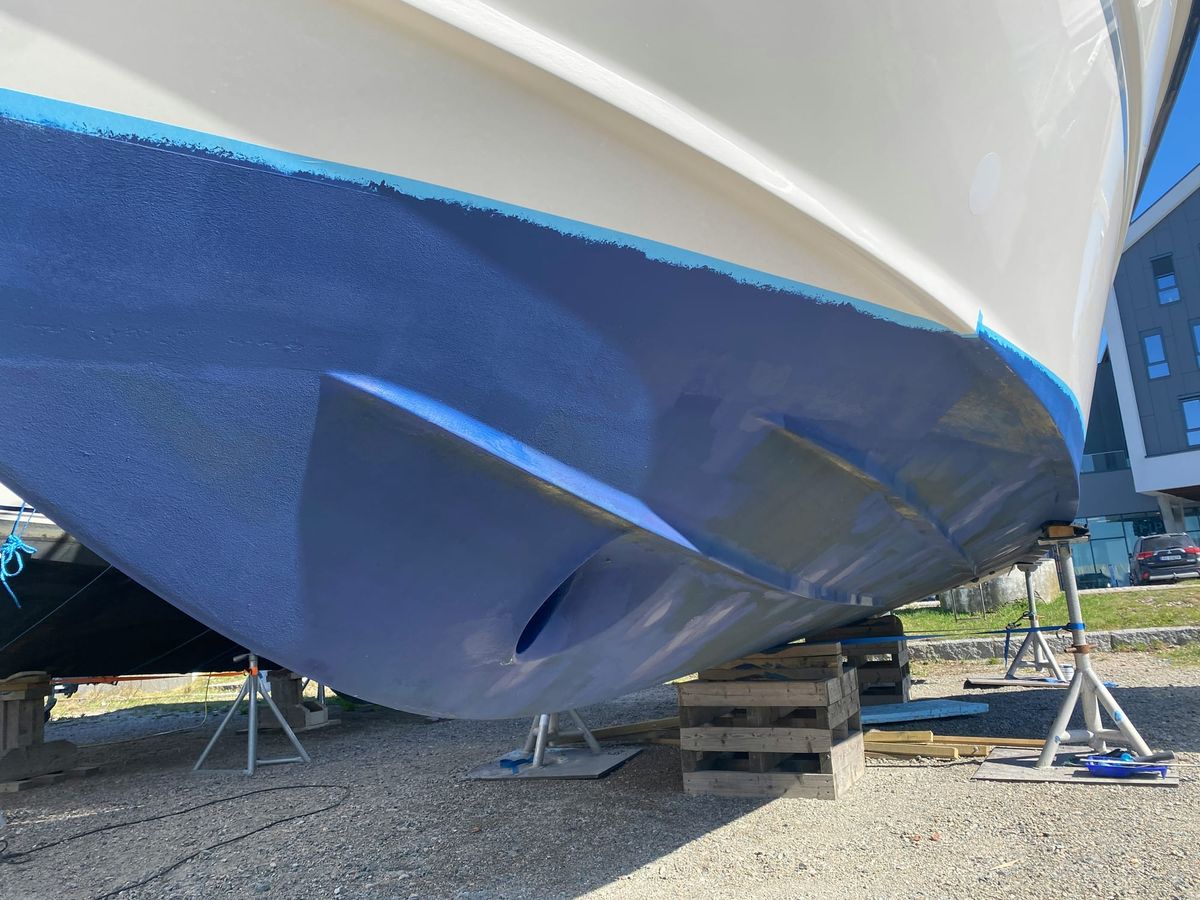
A yard worker in North Florida recently told me most cruisers pay twice what they should for bottom jobs. Not because yards are dishonest, but because sailors confuse necessary work with theater.
TLDR
- DIY bottom jobs on 40-50ft boats costs about $660-ish (inflation!) in materials versus $1,800+ yard labor, a savings of over $1,100 for 16 person-hours of work.
- Regional haul-out rates vary from $7.50/ft in Florida to $12/ft in Maryland per day, with hidden fees (pressure washing, blocking, storage) adding $300-500 to base quotes.
- Experienced cruisers supply their own paint and often apply one coat instead of the yard-standard two or three, cutting total bottom job costs from $8,000 to under $3,000.
SAFETY WARNING: Working under boats and with marine coatings involves serious risks including crushing injuries, toxic exposure, and falls. This article discusses costs only. Consult ABYC standards, yard safety officers, and paint manufacturer technical data sheets before attempting DIY work. Never work under a boat without yard-certified blocking, backup supports, and daily inspection of jack stands.
The hard numbers matter because most cruisers operate on annual maintenance budgets that don't absorb surprise four-figure invoices. A 45-footer hauled in California pays roughly $420 just to get lifted, pressure-washed, and blocked. Add two coats of ablative bottom paint (which slowly wears away, releasing biocide to prevent marine growth) applied by yard labor, and you're looking at $2,000 to $3,000 before touching anodes, thruhulls, or corroded engine leg components. For a cruising couple planning to haul twice annually in warm waters where temperatures above 75°F accelerate barnacle and weed growth, that's $6,000 minimum locked into bottom work alone.
The actual cost structure breaks along predictable lines. Haul and launch fees run $7.50 to $12 per foot depending on region and yard capacity. A 48-footer in Maryland pays around $504 for the first hour of haul time at $10.50/foot, then $175/hour for anything beyond basic lift and block. Storage while on the hard adds $25/day or $125/month. Pressure washing, if not included, runs another $5/foot. That's $240 just to remove growth before you touch paint.
Bottom paint itself costs roughly $90 per gallon for multi-season ablatives with 400 square feet of coverage per gallon. A typical 40-footer with approximately 650 square feet of bottom surface needs two gallons for one proper coat, totaling $180 in materials. Zinc anodes for rudder, prop, and shaft run $30 to $50 depending on size. Disposable suits, brushes, rollers, and masking tape add another $40. If you're doing the work yourself, the material total sits around $300 for paint and consumables, plus whatever the yard charges for haul, block, and storage.
Where the cost explodes is labor. Yards quote $60 to $100/hour for bottom prep and paint application, and a full bottom job on a 45-footer takes 12 to 16 hours of worker time when done properly. That's $720 to $1,600 in labor before overhead and profit margin get added. The final invoice frequently lands between $2,000 and $3,000 for what amounts to sanding, wiping, and rolling paint.
Cruisers who've run these numbers multiple times make different decisions. They haul mid-week when yards offer better rates. They supply their own paint, cutting the yard's material markup by 30 to 50 percent. They apply one coat instead of two or three, which works for fresh ablative paint on a clean hull that's been in temperate water less than 12 months. One coat of quality ablative applied to proper film thickness covers adequately and saves an entire day of labor or $800 in yard fees, though manufacturer specifications should always be followed for warranty coverage.
The most disciplined approach involves bundling work. If you're hauling for an insurance survey, schedule it during your planned bottom job window. If you're winterizing in a northern yard, negotiate the bottom work into off-season rates when travel lifts sit idle. A yard that charges $12/foot in July will often drop to $9/foot in November if you're staying on the hard through March.
Regional variations matter more than most cruisers expect. Florida yards see constant traffic and high biofouling, so haul-outs stay expensive but frequent. Caribbean waters demand similar schedules. New Zealand and Thailand offer cheaper labor but suffer from parts delays and engine leg corrosion issues common in warm saltwater.
For cruisers running 40 to 50-foot boats, the annual maintenance budget should allocate $3,000 to $5,000 just for haul-outs and bottom work. That assumes two hauls per year in warm climates where fouling happens fast, or one haul every 18 months in temperate zones. It includes zinc replacement, minor thruhull servicing, and at least one coat of paint per cycle.
What a bottom job actually involves: You're removing marine growth, inspecting underwater fittings for corrosion, and applying antifouling paint that prevents barnacles and weed from slowing you down. The work requires no special skills beyond patience, you're sanding, wiping with solvent, and rolling paint. But it is brutal physical labor in disposable suits in 90°F heat, often bent double or on your back. The 16 hours spreads across 3-4 days of actual calendar time with drying periods, which means storage fees mount. Back pain for days afterward is standard. Not all cruisers can perform this work regardless of budget, and it's a common source of conflict between partners when one refuses to continue doing it.
Critical prep and paint compatibility: Switching between hard paint (which creates a static barrier) and ablative paint requires full strip-down to gelcoat or a barrier coat. Before painting, inspect for blisters, check gelcoat condition, and perform a proper solvent wipe. Surface grit requirements vary by paint manufacturer. Paint delamination from incompatibility costs thousands to repair. Follow manufacturer specifications for number of coats, most require minimum two coats for warranty coverage and proper film thickness.
PPE and environmental requirements: Bottom paint contains biocides including copper and zinc pyrithione requiring NIOSH-approved respirators with organic vapor cartridges, not just dust masks. Chemical-resistant gloves, safety glasses, and disposable suits are mandatory. Pressure washing requires eye protection and creates skin penetration wound risk. EPA and local regulations govern bottom paint application, waste containment, and disposal. Many yards prohibit DIY work entirely or charge supervision fees that eliminate half the savings.
Anode selection: Zinc works in saltwater, aluminum in brackish water, magnesium in freshwater. Using the wrong anode type accelerates galvanic corrosion instead of preventing it.
What can go wrong: Missed thruhull corrosion, poor paint adhesion from inadequate prep, or blistering from trapped moisture can cost thousands to repair later. Thruhull and below-waterline work requires specialized knowledge and creates sinking risk, consider professional service for these items.
The delta between DIY and full-service yard work is not trivial. A 37-footer hauled, blocked, and stored for one month costs $403 in basic fees. Add $180 in paint, $78 in zincs and supplies, and the cruiser-completed total is $661. The same job quoted by a yard runs $1,800 to $2,200. That's a $1,100 savings for 16 hours of work, which breaks down to $68/hour of value retained.
A learnable pathway: Your first haul-out feels intimidating. Watch the yard crew and ask questions. Second time, handle your own zincs under yard supervision. Third time, tackle paint with a skilled friend alongside. By your third haul, it's routine maintenance you schedule around weather, assuming you have the physical capability and relationship bandwidth to sustain it.
The question is whether the $1,100 savings justifies the physical toll, time commitment, and learning curve, or whether your cruising budget can absorb professional service while you spend those 16 hours doing something else.
By Jeffrey Pierce