Hydrovane offset installation challenges on transom-hung rudder boats
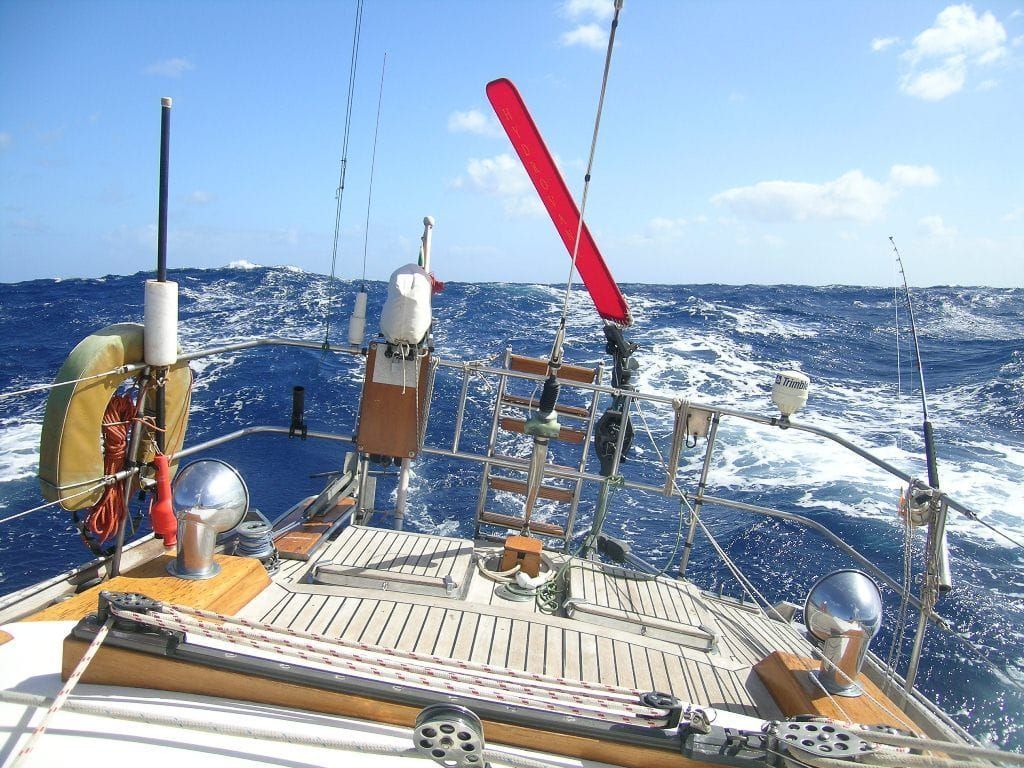
An offset-mounted windvane changes your steering geometry in ways that only become obvious 800 miles offshore when the auxiliary rudder cavitates on port tack and you realize the installation you approved at the dock is now the weak link in your passage plan.
TLDR
- Offset Hydrovane installations work reliably if done correctly, but transom flex under load and shaft misalignment are the two installation errors that will cost you thousands in refit or failure at sea.
- The ventilation risk cited by some manufacturers is largely theoretical; experienced cruisers report widespread success with offsets up to four feet, provided the rudder maintains clean water flow.
- Proper installation demands brutal honesty about your transom structure and a willingness to overbuild the backing plates, because the loads at the bracket under storm conditions will exceed anything you've seen at the dock.
The Offset Question Nobody Answers Correctly
Walk any cruiser anchorage and you'll see Hydrovanes mounted off-center on transom-hung rudder boats. The installation looks clean. The owner will tell you it works fine. What they won't tell you is whether they've actually tested it in 35 knots on a broad reach with the boat heeled hard over on the tack opposite the mount, because that's when the geometry stops being theoretical and starts being your problem.
The standard manufacturer line on offset installations splits into two camps. Some say don't do it beyond about 12 inches because the auxiliary rudder will ventilate when heeled away from the mount side. Others, specifically Hydrovane, claim their system is indifferent to offset placement as long as it has clean water. Both statements are true under certain conditions, and your job as the installer is to figure out which conditions apply to your boat.
Here's what actually happens. When you mount a windvane to port and heel hard to starboard, the auxiliary rudder rises toward the surface. On some hull shapes, particularly those with steep transoms or aggressive tumblehome, this means the rudder can lose bite or start pulling air. On other hulls, especially traditional full-keel designs with gentler overhangs, the rudder stays submerged and effective through a much wider range of heel angles. Hydrovane cites Southampton University testing to back their claim that offset mounting works, but they're also careful to specify "clean water" as the prerequisite. That's not marketing language. It's the entire ballgame.
The widest documented offset I've found is four feet, reported by a cruiser who said it worked at every point of sail. That's an outlier, but it's instructive because it tells you the system can tolerate significant asymmetry if the installation fundamentals are solid. Most successful offset installations fall in the 18 to 30-inch range, where you gain enough clearance from the main rudder to avoid turbulence but don't push so far outboard that heel angle becomes unmanageable.
What Kills Offset Installations
Transom flex is the failure mode nobody sees coming until it's too late. The Hydrovane installation guide states this plainly: "The loads on the Hydrovane Brackets will be enormous at critical times." Under load, if your transom isn't stiff enough, it will flex. The bracket will work loose. The whole assembly will start to move, and once movement begins, the fasteners are already compromised. By the time you notice it at sea, you're looking at an emergency repair with the tools and materials you happen to have aboard, which is never the right combination.
The fix is to overbuild the backing structure before you mount anything. Heavy-gauge stainless plates, through-bolted with oversized washers. Fiberglass reinforcement layups on the interior side of the transom if the skin is cored or thin. This isn't about meeting the minimum specs in the installation guide. It's about building a structure that won't move under the worst loads you'll see offshore, which are always higher than you think.
Shaft alignment is the other failure point that presents as an installation error but really reflects a lack of understanding about how the system works. The Hydrovane auxiliary rudder must hang vertically, both fore-and-aft and side-to-side. If the shaft is canted even slightly, the rudder will generate side forces that work against the steering correction the vane is trying to make. You end up with a system that hunts, overcorrects, or simply doesn't hold course reliably. This gets worse in following seas where the rudder is already fighting to stay effective as the stern lifts.
Getting the alignment right means using the H-bracket correctly and taking the time to measure and shim until the shaft is plumb in both planes. Hydrovane doesn't do installations, they ship the hardware configured for your transom dimensions, but they expect you to handle the setup with precision. The installation video from a Cal 39 shows the process clearly: you mount the brackets, hang the shaft, check vertical with a level, adjust, and recheck. If you rush this or eyeball it, you'll spend the next two years trying to tune a system that was misaligned from day one.
The Clean Water Problem
Clearance from the main rudder matters more in an offset installation than a centerline mount because you're already introducing asymmetry into the water flow. The auxiliary rudder needs to operate in undisturbed flow, which means staying far enough outboard to avoid the turbulence coming off the main rudder shaft and skeg. On most 48-footers with transom-hung rudders, this means at least 18 inches of lateral offset, sometimes more depending on the rudder chord and the hull shape at the waterline.
You can't determine this by looking at the boat on the hard. You need to study the waterline shape at typical cruising heel angles and understand where the flow separates. If your offset puts the auxiliary rudder into disturbed water from the main rudder wake, you'll get inconsistent steering response and a system that works well on some points of sail but not others. This isn't something you can fix after installation without relocating the entire mount.
The other clearance issue is the vane itself. Hydrovane publishes a specification for minimum clearance above the vane, and you need to verify that your backstay, radar arch, or solar panel frame won't interfere with the vane's full range of motion. An offset mount changes these clearances in ways that aren't obvious from the centerline position, particularly if you have asymmetric stern gear or a wind generator mounted off-center.
Trade-offs You Can't Avoid
Mounting offset gives you operational advantages. The system is easier to reach for adjustment, you keep your overall length unchanged, and you avoid adding structure aft of the transom that complicates docking and anchoring. The downside is you're putting significant cantilever loads on one side of the transom, and you lose the option of mounting in a protective cage behind the main rudder where the auxiliary rudder is shielded from debris or collision.
Some cruisers mount behind the main rudder specifically for protection, accepting the added length and reduced accessibility. Others prioritize ease of use and offset. Both approaches work if you understand the compromise you're making. The failure comes when you try to split the difference and end up with an offset mount that's too far outboard to be structurally sound or too far inboard to get clean water.
One reported benefit of using a windvane is it forces you to sail more efficiently. Excess canvas that causes heavy weather helm or excessive heeling doesn't just slow the boat, it makes the self-steering work harder. Cruisers who rely on windvanes tend to reef earlier and balance the helm more carefully, which often results in the same or better boat speed with less strain on the rig. This matters for offset installations because a well-balanced boat heels less, and reduced heel means the offset rudder stays deeper and more effective.
The Maintenance Reality
Hydrovane systems use intentionally loose joints. This is not a defect. The play in the joints prevents the system from oversteering and allows it to tolerate salt buildup and grit in the pivots. If you tighten everything down hard, you'll restrict movement and degrade performance. The trade-off is you need to periodically check and re-tighten the fasteners as they work under load, particularly after heavy weather or extended use in rough conditions.
This maintenance rhythm is more critical on offset mounts because the cantilever loads are higher and asymmetric. You're asking one side of the transom to absorb forces that would be split more evenly in a centerline installation. The fasteners will work harder, and you'll need to inspect them more often. Plan on a full check of the mounting hardware every six months or after any significant offshore passage.
The Hydrovane Operation and Troubleshooting Guide from March 2023 covers the maintenance intervals and adjustment procedures, but it doesn't emphasize the heightened vigilance required for offset mounts. That's knowledge you gain from experience or from listening to cruisers who've actually lived with these systems offshore for multiple seasons.
Offset installations work. The boats in the anchorage prove it. But they work because someone took the time to engineer the mount correctly, reinforce the transom properly, and align the shaft precisely. Skip any of those steps and you're building a problem that won't show up until you're far enough offshore that turning back isn't an option.
By Jeffrey Pierce