Inspecting chafed dock lines and halyards before ocean passages on bluewater boats
The line that parts at 0300 doesn't fray in front of you. It frays in the dark, where the chock meets the deck, while you sleep below convinced your boat is secure.
TLDR
- 62% of dock line failures come from abrasion at contact points, not age or UV damage.
- Heat buildup from friction melts nylon dock lines internally before external damage becomes obvious.
- Weekly inspection of high-load contact zones prevents the sudden parting that costs boats in storm surges.
The Real Failure Mode
Most cruisers check their dock lines by running a hand along the exposed sections. They see clean white braid, feel no obvious wear, and move on. The problem is that chafe doesn't announce itself in the middle of a span. It concentrates at three points: where the line crosses a chock, where it bears against a piling, and where it runs over a cap rail edge. Those are the sections that saw 15,000 micro-abrasions while you were provisioning in town.
Abrasion accounts for about 62% of all dock line failures. Not UV rot. Not age. Friction against a hard edge, repeated with every tidal shift and wind gust. The individual fibers break down internally before the outer braid shows more than a slight fuzz. By the time you see visible fraying, the line has already lost 30% of its strength. In a storm surge or a spring tide with a cross-wind, that's the difference between your boat staying on the dock and ending up on the rocks.
The second failure mode is less visible. Nylon generates heat when it's loaded and moves across a hard surface. That heat has nowhere to go if you've slipped a section of garden hose over the line as chafe protection. The hose traps the heat against the nylon, and the core begins to melt from the inside. You'll never see it. The outer braid looks fine. The line parts under normal load because the interior has fused and lost all elasticity.
What to Inspect and How Often
Inspect dock lines weekly if you're staying put for more than a few days. Inspect them again the day before you leave. Focus on the points where the line contacts hardware or the dock. Pull the line through your hands slowly and feel for any change in texture. A slight fuzz means internal damage. Any visible cut, no matter how small, means replacement.
For lines running through closed chocks, pull slack into the boat so you can inspect the section that normally sits inside the chock. That's where the load concentrates and where abrasion happens fastest. If you're in a high-tidal-range area or anywhere with consistent surge, those inspection intervals drop to every three days. The Pacific Northwest, the UK coast, and tidal passes in the Caribbean will destroy dock lines faster than a season in the Med.
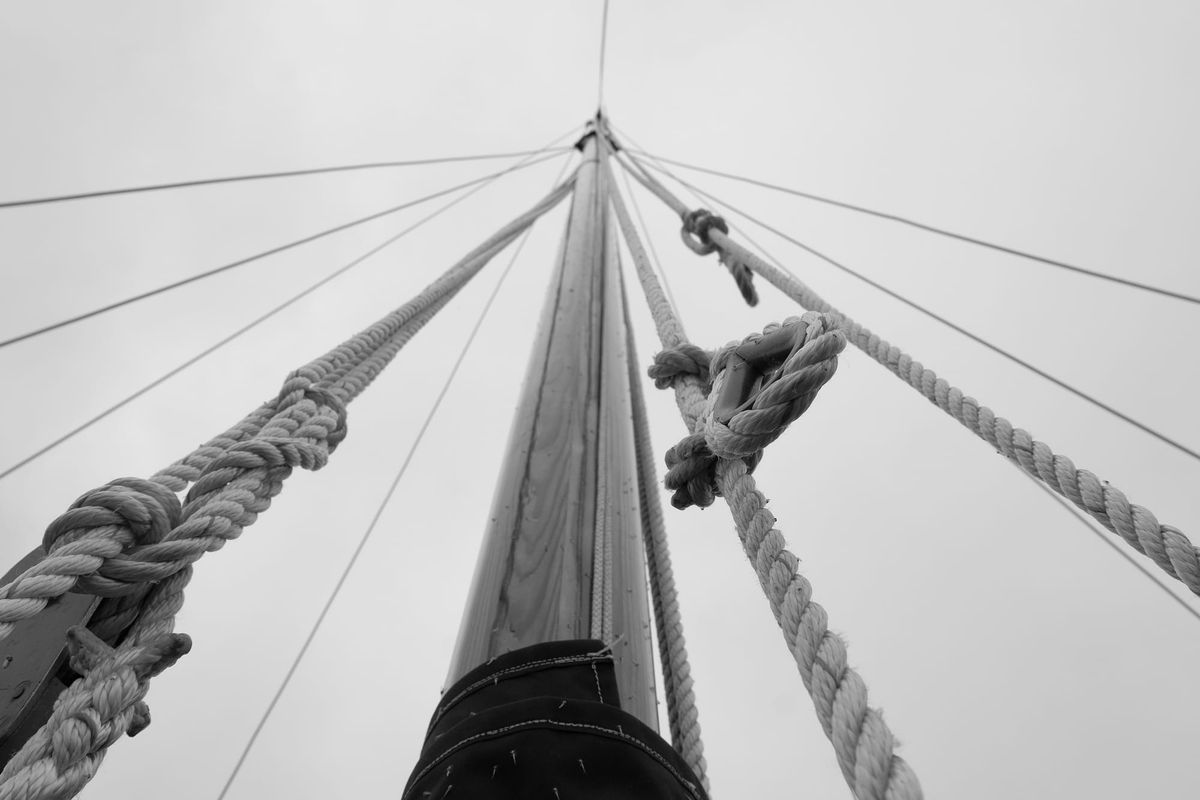
Halyards get the same treatment but with different contact points. The sheave at the masthead and the exit point from the mast are where chafe concentrates. Run the halyard down and inspect those sections before every passage. A halyard failure offshore means a boom drop or a mainsail you can't hoist. That's a diversion to the nearest port, at best. At worst, it's a jury rig in a seaway with an injured crew.
Heat, Hose, and Bad Solutions
Garden hose slipped over a dock line is standard practice at nearly every marina. It's also one of the worst solutions for preventing chafe in storm conditions. The hose keeps the line from abrading against the dock edge, but it traps heat during heavy loading. Nylon's tensile strength drops as it heats up. In a storm, when the line is under maximum load and moving constantly, the hose becomes an insulator that accelerates internal failure.
If you need chafe protection, use a soft eye spliced into the line or a custom fairing piece that allows airflow. For temporary protection in a storm, leather or heavy canvas wrapped and secured with waxed whipping twine works better than anything rigid. The goal is to disperse the friction, not trap the heat.
Sizing and Strength Margins
A 48-footer with average windage needs 5/8-inch three-strand nylon or 1/2-inch eight-braid for dock lines in normal conditions. The line should have a tensile strength at least eight times the maximum expected load. That margin accounts for chafe, age, and UV degradation you haven't spotted yet. Longer lines, 25 to 30 feet instead of 15, provide better shock absorption through stretch. Nylon's elasticity is its primary advantage over polyester or high-tech fibers. Use that stretch instead of fighting it with short, tight lines.
Carry two full spare sets of dock lines and at least one spare halyard for every critical function. Source those spares before you leave for remote cruising grounds. A chandlery in Tahiti or Panama might have what you need, but it won't be cheap and it won't be quick.
The Real Cost
The line that fails isn't the one you were worried about. It's the one you checked last week and thought looked fine. It parts during a tidal shift at 0300 when no one is on deck. Your boat swings into the piling or the neighboring vessel. The damage is always more expensive than the $80 you didn't spend on a new dock line.
Inspect where the load concentrates. Replace what shows any fuzz. Carry spares. The rest is just hoping the weather stays calm.
By Jeffrey Pierce