Best fuel pump to use for pre-engine fuel supply
Your diesel doesn't care about your fuel pump until the filters upstream are already dead.
TLDR
- Most "fuel pump failures" on bluewater cruisers are actually clogged filters starving the lift pump, causing it to overheat and burn out from overwork, not mechanical defect.
- A high-flow spin-on filter system with an integrated vacuum gauge (Racor or Plexsun) prevents pump failure by signaling restriction before damage occurs.
- Experienced offshore sailors replace filters every 1-2 years and polish fuel religiously, but only replace lift pumps when they show actual mechanical stress, not on an arbitrary schedule.
The question gets asked wrong. Cruisers ask which fuel pump to buy when the real problem is that they're killing perfectly good pumps by forcing them to suck through clogged filters. I've watched a $400 Yanmar OEM lift pump die in 18 months because the owner ignored a 10-micron filter that should have been changed six months earlier. The pump didn't fail. It was murdered.
On a typical 48-footer with a 40-50 HP diesel, your fuel delivery system has three jobs: keep contamination out, move clean fuel to the injectors, and signal when something upstream is restricting flow. Most factory setups handle the first two adequately but fail completely at the third. You find out your primary filter is clogged when the engine dies 200 miles from the nearest fuel dock, not because a gauge told you three weeks earlier when it was still a maintenance task instead of an emergency.
The Real Weak Point Isn't the Pump
Lift pumps on marine diesels are absurdly reliable when they're fed clean fuel at atmospheric pressure. The Yanmar 4JH series, Volvo MD2030, and Westerbeke 38B all use mechanical or low-pressure electric lift pumps rated for decades of service. They fail early for one reason: fuel starvation caused by clogged filters forcing them to pull vacuum against restriction until the diaphragm cracks or the motor burns out.
Water contamination is the primary killer. In the tropics, condensation in partially filled tanks accelerates. You're adding water to your fuel every time the ambient temperature drops 15 degrees overnight and you're sitting at half tanks. That water settles, algae blooms in the interface layer, and your primary filter loads up with biomass. The lift pump doesn't know the filter is clogged. It just works harder, runs hotter, and dies.
The second mode is debris. Coastal fueling in places with high sediment loads (Gulf of Mexico, parts of Australia, anywhere with old infrastructure) introduces particulates that load filters fast. A cruiser running the Baja coast told me he was changing his primary every 400 engine hours instead of the manufacturer's recommended 800 because Mexican fuel was consistently dirty enough to cut filter life in half. He stopped losing lift pumps when he started trusting the vacuum gauge instead of the hour meter.
What Actually Works Offshore
The solution isn't a better pump. It's a better early warning system. A spin-on filter assembly with an integrated vacuum gauge gives you real-time restriction data. Racor and Plexsun both make units sized for 40-50 HP diesels. The gauge reads in inches of mercury. When you're pulling more than 6 inches of vacuum at cruise RPM, the filter is loading. At 10 inches, you're already stressing the pump. At 15, you're asking for a failure in the next 50 hours.
This isn't theoretical. The vacuum gauge tells you when the filter is doing its job (catching contamination) versus when it's clogged and becoming a restriction. You change the filter when the gauge says to, not when the calendar says to. In clean fuel conditions, that might be 1,000 hours. In dirty fuel or biological contamination, it might be 200. The gauge doesn't care about your maintenance schedule. It cares about pressure differential.
High-flow spin-on filters also reduce the pump's workload during normal operation. A 10-micron Racor 500-series filter flows 90 GPH at 1 PSI restriction when clean, far exceeding the demand of a typical 40 HP diesel at cruise. That headroom matters. When the filter starts loading, you still have flow capacity before the pump has to compensate by pulling harder.
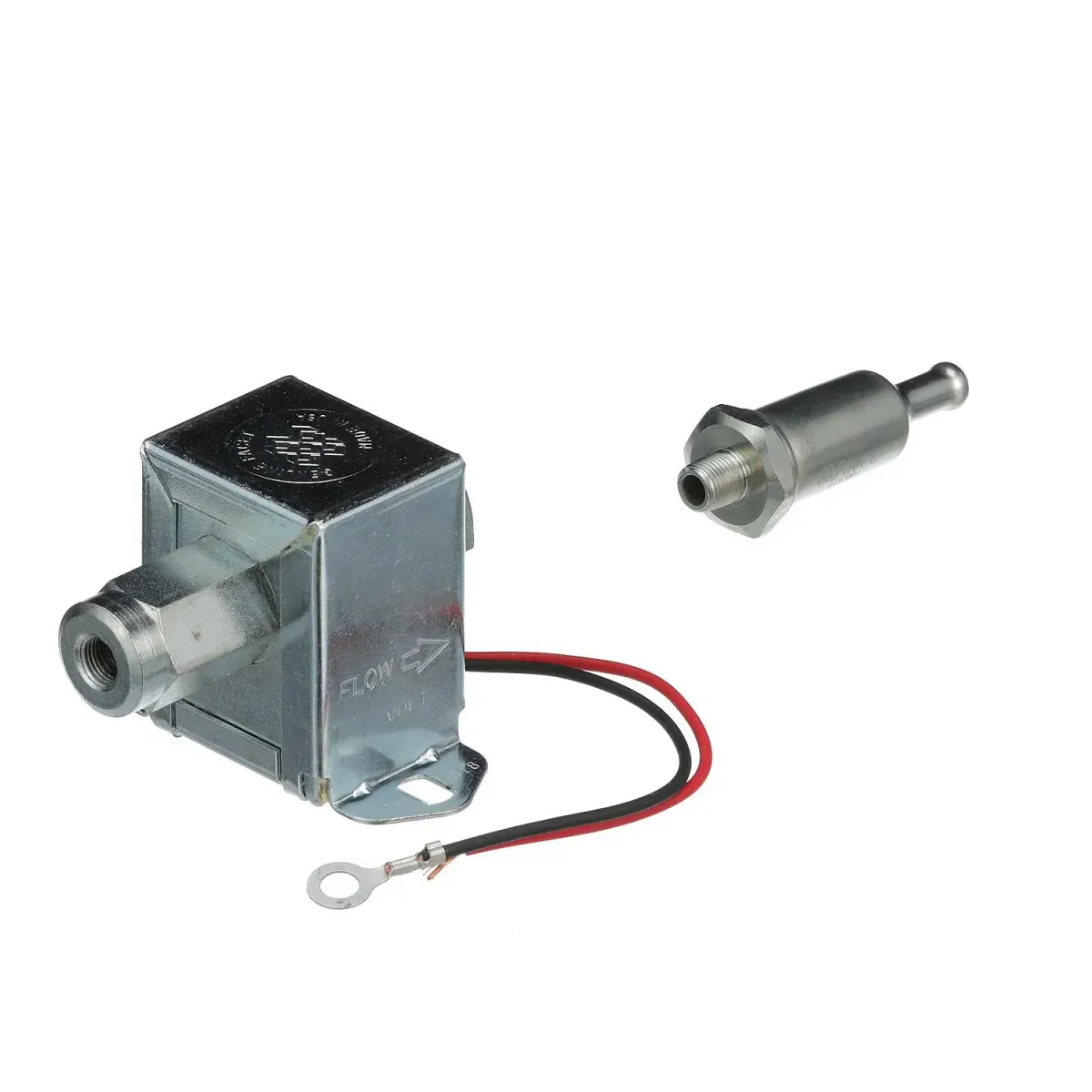
For the lift pump itself, most factory units are adequate if you're maintaining clean fuel supply. Yanmar, Volvo, and Westerbeke OEM pumps are sized correctly for their engines. The aftermarket recommendation for Balestinian or Schenker pumps applies mainly to older installations where the factory pump is weak or unavailable.
The Maintenance Trap
Standard advice says replace your lift pump every five years. Experienced cruisers say that's nonsense unless you're also addressing fuel quality. A lift pump running on polished fuel with clean filters will outlast the engine. A lift pump running on contaminated fuel with neglected filters won't make it two seasons.
The critical maintenance interval is filter replacement every 1-2 years, regardless of engine hours, and fuel polishing before long passages. Fuel polishing removes water and biomass that filters alone can't handle. Cruisers running long legs in remote areas (South Pacific, Indian Ocean) carry portable polishing kits and spare filters because local fuel quality is unpredictable and parts availability is worse.
Cold climate operations introduce a separate failure mode: fuel gelling. Diesel gels below 15°F depending on the blend, restricting flow and causing the lift pump to starve. The fix isn't a better pump. It's winterized fuel or heated filter assemblies. Northern Europe and Canadian cruisers run heated Racor units or add anti-gel additives during shoulder seasons.
Air leaks are the other silent killer. A pinhole in the fuel line between the tank and the pump allows the system to pull air instead of fuel. The pump runs dry, overheats, and fails. This shows up as surging or stalling under load, not a clean shutdown. Before replacing a pump, pressure-test the entire fuel system from the tank pickup to the filter inlet. Most "bad pumps" are actually good pumps with bad plumbing.
What to Carry and Where
If you're cruising beyond reliable parts supply, you need redundancy at the filter level, not the pump level. Carry three spare primary filters and one spare secondary. Carry a complete filter change kit with the correct wrench, drain pan, and replacement O-rings. A spare lift pump is optional unless you're running an obscure engine in a region with no parts network.
The vacuum gauge is non-negotiable. It's the only instrument that tells you when the system is under stress before it fails. Install it during a calm refit, not as an emergency repair in a remote anchorage.
Most pump failures aren't pump failures. They're fuel management failures that kill the pump as a secondary consequence. Fix the fuel, and the pump will outlast everything else in the engine room.
By Jeffrey Pierce