PLB Selection & Real-world SAR Realities
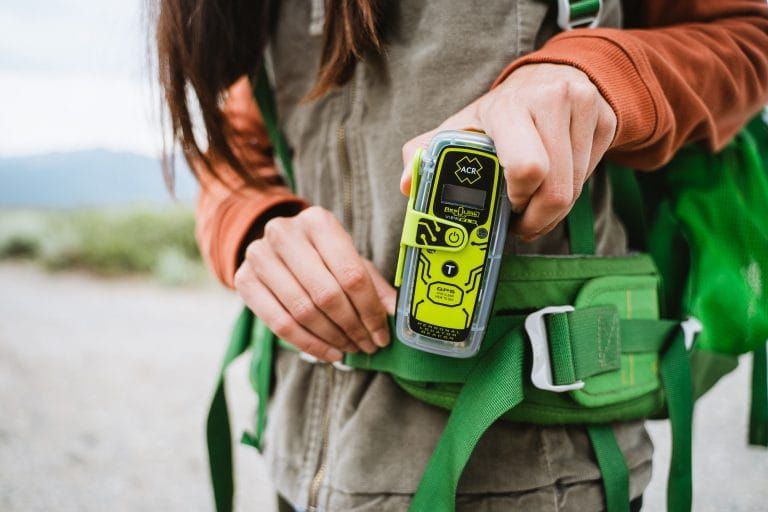
A PLB will get you found if you go overboard, but only if you understand what happens after you press the button, and what routinely goes wrong before anyone shows up.
TLDR
- Most 406 MHz beacon activations are false alarms, typically triggered by crew unfamiliarity or careless handling during tests.
- Return Link Service confirmation and AIS alerting matter more than advertised satellite GPS for getting boats to you before SAR launches.
- Registration quality determines whether the Coast Guard calls you or scrambles a helicopter, which is why false alarm resolution training saves taxpayer dollars and your credibility.
I watched a crew trigger a full search-and-rescue response 40 miles off San Diego because someone "wanted to see how it worked." The device went into the safety gear bag for inspection, the antenna extended during handling, and the 406 MHz alert fired. Within 20 minutes, Coast Guard Sector San Diego was on VHF Channel 16 broadcasting a Pan-Pan, a maritime urgency call, with our boat name. The scramble stood down only because we had current registration with a working cell number and answered the rescue coordination center (RCC), the Coast Guard command post that manages search-and-rescue, callback immediately. The crew thought it was a self-test button. It was not.
The failure isn't the technology. It's the operator.
False Alarms Are the System Default
This scenario accounts for most of the noise in the system. The Cospas-Sarsat network, an international satellite system designed to detect distress beacons, processes thousands of beacon activations annually. The vast majority are false. Most resolve with a single phone call to the registered emergency contact. The remainder require the rescue coordination center to make a decision: launch assets based on incomplete information, or assume it's another mistake and risk ignoring someone drowning. Your registration quality directly determines which path they take.
A personal locator beacon does not call the Coast Guard. It transmits a burst to low-earth-orbit satellites, which relay your GPS position and unique identification code to a ground station, which queries the registration database and contacts the listed phone numbers. If no one answers, or if the contact information is stale, the RCC has to decide whether the signal represents a real distress or another dock activation.
The decision tree gets harder when the device fires in a marina, which happens often. Semi-automatic immersion triggers sometimes fault from improper storage or defective units exposed to dock spray, bilge water splashing during maintenance, or freezing rain in northern latitudes. These are not normal operating conditions for properly maintained beacons. Float-free EPIRB brackets suffer similar problems. While PLBs are typically manual-activation, the same sensitivity exists in any model with water-activated circuits. If your PLB is clipped to a lifejacket and you test the jacket inflator near a hose, you may fire the beacon.
Testing itself causes activations. The self-test function on most 406 MHz beacons sends a diagnostic burst but does not ping satellites. Holding the button too long, or pressing the wrong sequence on your specific model, can trigger a full distress. Follow your manufacturer's test protocol exactly. You then have two tasks: cancel the alert using the device's dedicated cancel protocol if equipped, and call the rescue coordination center immediately to confirm stand-down. U.S. boaters call USCG at +1-757-398-6231 (Atlantic Area) or +1-510-437-3701 (Pacific Area) depending on position. If you don't have these numbers saved in your phone, you're already late.
What Matters More Than Satellite Coverage
Standard advice prioritizes 406 MHz and integrated GPS, which is correct but incomplete. The specs that matter for a cruising PLB in 2024 are Return Link Service, AIS-SART capability, and a strobe visible at night.
Return Link Service (RLS) confirms that your distress signal reached the network by sending a brief acknowledgment back to your beacon. You see a green LED confirmation flash. It does not guarantee a helicopter launch, but it tells you the beacon is working, which lets you focus on survival instead of wondering if anyone heard you.
AIS transmission, technically called AIS-SART per IEC 61097-14, alerts nearby vessels directly via VHF, independent of satellite relay. AIS (Automatic Identification System), the VHF-based tracking system that shows nearby vessels on your chartplotter, turns every AIS-equipped vessel potentially within radio range into a first responder. In coastal or passage-making scenarios, the closest boat may be a freighter or another cruiser miles away, not a Coast Guard cutter hundreds of miles away. This assumes someone is monitoring and willing to divert, which isn't guaranteed in all waters.
The strobe matters because the final phase of any rescue is visual acquisition. SAR aircraft and surface vessels home in on your GPS coordinates, but from a helicopter at 500 feet or a rigid inflatable boat (RIB) doing 25 knots in 6-foot seas, a human head is invisible. A high-intensity LED strobe, especially one with infrared for night vision equipped helicopters, closes the last hundred yards.
The specification to demand is clear: 406 MHz with GPS encoding per FCC Part 95 type acceptance requirements, RLS confirmation, AIS-SART transmission capability meeting IEC 61097-14, and a multi-mode strobe. Consult current ACR, Ocean Signal, and McMurdo product lines for models meeting these specifications. Verify FCC and Cospas-Sarsat type acceptance before purchase. Expect to pay $300-$600 for a PLB meeting these specifications.
Where to Mount Your PLB
The beacon must be accessible with either hand while you're in the water. Chest-height attachment on your PFD shoulder strap or harness keeps the antenna vertical and unobstructed when you activate it. Some cruisers use a short tether to prevent loss during activation, but the tether length must allow you to extend your arm fully to raise the antenna clear of wave tops. One-hand operation while swimming is not optional.
Semi-Auto Activation Is Not Perfect Insurance
A PLB clipped to your harness will not save you if you hit your head on the boom and go over unconscious. Manual activation requires a conscious decision. Semi-automatic models, which fire when the lifejacket inflates, depend on the jacket inflator working. Cruisers testing these systems report non-activation failures in warm seawater where salinity sensors underperform, and in cold water where temperature affects battery output.
But unconscious overboard is lethal 100% of the time. If you sail cold waters or short-handed, a semi-auto PLB with known warm-water sensor issues is still better than manual-only when you're hypothermic or concussed. Test it in your actual conditions. North Atlantic immersion gives you 10-15 minutes of hand function before hypothermia destroys your ability to manually activate anything.
The solution is layering. A PLB backed by an AIS man-overboard beacon gives you two independent alert paths. The AIS beacon fires on immersion, no manual input required, and pings nearby vessels instantly. The PLB, manually activated once you surface and assess, brings satellite coverage and long-range SAR. Neither alone is sufficient. This layered approach costs $700-900 plus ongoing testing, budget it alongside your EPIRB and don't skip the PLB to afford the MOB beacon alone.
If carrying multiple beacons, register all hex IDs together in the same NOAA account with cross-reference notes. Multiple transmitting beacons create RCC confusion if the identification codes aren't linked in the database.
Registration Is Not Paperwork
Registration determines response speed. The database entry must include a working mobile number, an alternate landline, and an emergency contact who answers unknown calls. Update it every time you change SIM cards, every time you cross into a new cruising region with a new local number, and every time your boat moves to a new homeport. The beacon registration database, operated by NOAA as part of the international Cospas-Sarsat system at BeaconRegistration.NOAA.gov, requires this data but does not verify it. An out-of-date contact list turns your distress into the percentage that requires RCC judgment calls.
If your emergency contact is aboard, list a land-based friend who keeps a note of your passage plan and checks in monthly. They're the one who knows you're actually offshore when the alert fires, not assuming you're testing gear at the dock.
What to Do After You Press the Button
Once activated, your job is to stay afloat and conserve energy. If you have a sea anchor or drogue in your ditch bag, deploy it to reduce drift. Keep the PLB antenna vertical and clear of wave tops. The strobe increases your visibility but also drains battery, most units are designed to run continuously for 24+ hours, but assume less in cold conditions. If you have RLS, the green LED confirmation tells you satellites received your signal. Now you wait.
Typical SAR response time depends on your position and available assets. Coastal activations can see helicopter or boat response in under an hour. Offshore passages may wait hours for the nearest vessel to divert or for aircraft to launch from distant bases. The 20-minute response in the San Diego incident was exceptionally fast due to proximity to a major Coast Guard station.
Testing Protocol
Perform self-test monthly per your manufacturer's instructions. Never perform full activation test unless coordinating with your rescue coordination center. Have the unit professionally inspected annually. Most PLBs use non-rechargeable batteries with five-year service lives. Frequent full activation testing consumes battery capacity you need for actual emergencies.
After each self-test, confirm your registration is current at BeaconRegistration.NOAA.gov. Log into your account, verify the phone numbers are correct, and update your vessel position if you've moved to a new cruising area.
The small percentage of real alerts that make it through the false alarm filter still wait for RCC decisions. Make sure yours doesn't require one.
By Jeffrey Pierce